

Great Value Saltine Crackers, 16 oz, 4 Count
- Made with durum wheat flour
- High in fiber
- 56g of whole grains per serving
- Top with traditional marinara sauce for a quick weeknight meal the whole family can enjoy
- Also pairs perfectly with veggies, chicken, herbs and cheese
- Get creative and make up your own fun recipes
$2.00
Discovering Affordable Comfort in Every Crispy Bite
When I was growing up, there was always a familiar red box tucked away in our pantry—saltine crackers, the unsung heroes of countless childhood snacks, soup companions, and late-night hunger fixes. As an adult with my own household to manage and grocery budget to balance, I’ve developed a particular appreciation for Great Value Saltines. These humble crackers have become a pantry staple in my home, offering that perfect combination of versatility, affordability, and simple satisfaction that’s increasingly hard to find in today’s overcomplicated food landscape.
What began as a casual purchase one day at Walmart has evolved into a genuine appreciation for these crispy squares. I’ve found myself reaching for them so regularly that I decided to dive deeper into understanding everything about them—from ingredients to value comparison, versatility to dietary considerations. Great Value Saltines offer exceptional quality at nearly half the price of name-brand alternatives, making them one of the smartest pantry staples for budget-conscious households.
Join me as I share everything I’ve learned about these understated crackers, whether you’re a long-time fan looking to validate your choice or someone considering making the switch from pricier name brands. This comprehensive guide will walk you through everything you need to know about Great Value Saltines—the affordable pantry hero you might be overlooking.
The Basics: What Exactly Are Great Value Saltines?
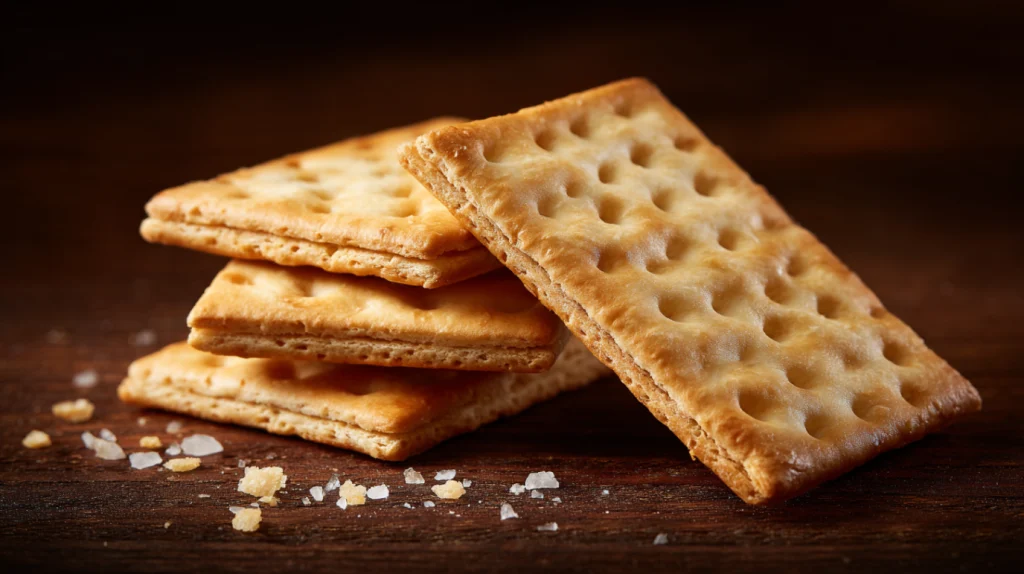
Before diving into specifics, let’s establish what we’re talking about. Great Value Saltines are Walmart’s store-brand version of the classic saltine cracker—those light, airy, square crackers with distinctive perforations and a delicate sprinkling of salt on top. The name “saltine” itself refers to this style of cracker, which has been a staple in American pantries for generations.
These crackers maintain the traditional saltine profile: thin, crisp, mildly salted, and subtly flavored. They feature the characteristic holes (called “docking” in baker’s terminology) that prevent the crackers from bubbling during baking and help maintain that distinctive flat, crisp texture we all recognize.
I’ve always found something comforting about their simplicity. In a world of increasingly complex snack options with bold flavors and exotic ingredients, saltines remain refreshingly straightforward—a testament to the idea that sometimes, the simplest foods provide the most enduring satisfaction.
Ingredients: What Goes Into Great Value Saltines?
When I first started paying closer attention to food labels, I was pleasantly surprised by the relatively straightforward ingredient list of Great Value Saltines. The primary ingredients are:
- Enriched flour (wheat flour, niacin, reduced iron, thiamine mononitrate, riboflavin, folic acid)
- Vegetable oil (soybean, canola, and/or palm oil)
- Salt
- Leavening agents (baking soda, yeast)
- Malted barley flour
- High fructose corn syrup (in small amounts)
While not entirely free from processed ingredients, the list is notably shorter than many modern snack foods. The enriched flour provides some basic nutrients, though I wouldn’t consider these crackers a significant source of nutrition.
One thing I’ve noticed is that Great Value Saltines do contain high fructose corn syrup, though in minimal amounts. This ingredient has become somewhat controversial in recent years, but it appears far down on the ingredient list, indicating a very small quantity. For those specifically avoiding HFCS, this might be a consideration, though the amount is minimal compared to many other processed foods.
I appreciate that Great Value has maintained the traditional saltine formulation without adding unnecessary artificial flavors or colors. The crackers contain no artificial preservatives, relying instead on their low moisture content and packaging to maintain freshness.
Price Point: The Budget-Friendly Appeal
Let’s talk about one of the most compelling reasons to choose Great Value Saltines: the price. In my experience, these crackers typically cost between $1.00 to $1.50 for a 16-ounce box, depending on your location and any ongoing promotions. This price point represents significant savings compared to name-brand alternatives like Nabisco Premium Saltines, which often cost around $2.50 to $3.50 for the same size.
For my household, this translates to annual savings of approximately $30-$50 just on saltine crackers. While that might not sound like a life-changing amount, it exemplifies the cumulative impact of choosing store brands across your grocery list. These small savings add up meaningfully over time.
I’ve found that during certain times of the year, particularly during soup season in the fall and winter months, Walmart sometimes offers special promotions on Great Value Saltines, bringing the price down even further. I’ve occasionally stocked up during these sales, as the crackers have a relatively long shelf life.
For those who consume saltines regularly or use them frequently in recipes, the savings become even more significant. I use these crackers at least weekly—sometimes as a snack with cheese, sometimes crumbled into soups, and occasionally as an ingredient in recipes—making the cost difference particularly relevant to my household budget.
Availability: Where to Find Great Value Saltines
As a Walmart store brand, Great Value Saltines are exclusively available at Walmart stores and through Walmart’s online shopping platforms. This limited availability might be inconvenient for some shoppers who don’t regularly visit Walmart or who don’t have a location nearby.
In my experience, nearly every Walmart Supercenter reliably stocks Great Value Saltines, usually located in the cracker and cookie aisle. They’re typically positioned near other saltine options, including the Nabisco Premium brand. Smaller Walmart formats generally carry them as well, though with potentially fewer packaging options.
For online shoppers, Great Value Saltines are available through Walmart.com and the Walmart app for both delivery and pickup services. I’ve occasionally added them to my online grocery orders without issue, though I’ve found that the crackers sometimes arrive with slight damage to the corners of the box when delivered—a minor inconvenience that doesn’t affect the crackers themselves when properly packaged in their internal wrappers.
One benefit of Walmart’s widespread presence is that these crackers are accessible in most regions of the United States, including many rural areas where other retail options might be limited. For travelers or those living in remote locations, this consistent availability can be particularly valuable.
Dietary Considerations: Allergens and Restrictions
Understanding dietary restrictions is increasingly important in today’s food landscape, so let’s address some common concerns:
Gluten Content
Great Value Saltines are NOT gluten-free. They contain wheat flour as their primary ingredient, along with malted barley flour, both of which contain gluten. For those with celiac disease or gluten sensitivity, these crackers are not suitable. Walmart does offer some gluten-free cracker options under the Great Value brand, but traditional saltines are not among them.
Allergen Information
These crackers contain wheat (gluten) and may contain soy from the vegetable oil blend. The manufacturing facilities also process products containing milk, eggs, and potentially tree nuts, so those with severe allergies should exercise caution. However, the standard formulation does not directly include dairy, eggs, peanuts, or tree nuts as ingredients.
I appreciate that Walmart clearly labels potential allergens on their packaging, making it easier for consumers with dietary restrictions to make informed choices. The packaging typically includes a “Contains” statement highlighting major allergens, as well as a “May contain” or “Processed in a facility” statement addressing potential cross-contamination risks.
Vegan Status
Great Value Saltines are technically vegan as they contain no direct animal products or by-products. However, strict vegans might want to consider that the manufacturing facilities also process non-vegan items. The crackers contain no dairy, eggs, honey, or other animal-derived ingredients in their formulation.
Kosher Certification
In my research, I’ve found that Great Value Saltines do not carry a kosher certification symbol on their packaging. For those following kosher dietary laws, this is an important consideration that might make these crackers unsuitable depending on individual observance levels.
Sodium Content
Like most saltines, Great Value Saltines contain a moderate amount of sodium—approximately 150-170mg per serving of 5 crackers. While not exceptionally high compared to many processed foods, this could be a consideration for those on strict low-sodium diets.
At the time of writing, I haven’t found a specific reduced-sodium version of Great Value Saltines, unlike some name brands that offer low-sodium alternatives. For those strictly monitoring sodium intake, this might be a factor in choosing between Great Value and other brands that offer reduced-sodium options.
Nutritional Profile: What to Expect
Understanding the nutritional content of everyday staples helps with meal planning and dietary management. Here’s what you can expect from Great Value Saltines:
Calories and Macronutrients
A typical serving of 5 crackers contains approximately:
- 60-70 calories
- 1.5g fat (0g trans fat)
- 11g carbohydrates
- Less than 1g protein
- 0g sugar
- 150-170mg sodium
These numbers make saltines a relatively light snack option compared to many alternatives. I’ve found them satisfying without being calorie-dense, which makes them useful for hunger management between meals.
Enriched Flour Benefits
The enriched flour used in Great Value Saltines provides small amounts of several B vitamins (niacin, thiamine, riboflavin) and iron, as required by U.S. food standards for enriched grain products. While not significant enough to rely on as a primary source of these nutrients, the enrichment does add some nutritional value beyond plain white flour.
Considerations for Specialized Diets
For those following specific dietary approaches:
- Low-carb diets: With approximately 11g of carbohydrates per serving, these crackers are not ideal for strict low-carb approaches like keto.
- Low-fat diets: At 1.5g of fat per serving, these can fit into moderate low-fat eating plans.
- Calorie-restricted diets: The defined portion size and moderate calorie content make these crackers relatively easy to incorporate into calorie-controlled eating plans.
Packaging Options: Sizes and Storage Considerations
Great Value Saltines come in several packaging configurations to suit different household needs:
Standard Box (16 oz)
The most common format is the 16-ounce box, which contains four individually wrapped sleeves of crackers. This packaging mimics the traditional saltine format that most consumers are familiar with from name brands. I find this size ideal for my two-person household, lasting about two to three weeks with regular use.
Family Size (24 oz)
For larger households or frequent saltine users, Walmart offers a larger family size box of Great Value Saltines. This format provides better value per ounce and reduces packaging waste for high-volume consumers. I occasionally purchase this size when hosting events or during winter months when soup consumption increases in our home.
Individual Packaging
The internal packaging of Great Value Saltines features four separately wrapped sleeves within the main box. This design helps maintain freshness once the box is opened and allows for convenient portion control or easy transport for lunches and travel.
One advantage I’ve noticed is that this individual wrapping prevents the entire box from becoming stale if one sleeve is opened but not immediately consumed. The wrappers are not resealable, however, so transferring opened crackers to an airtight container is advisable for maximum freshness.
Environmental Considerations
From a sustainability perspective, Great Value Saltines packaging is relatively standard for the industry. The outer box is cardboard and recyclable in most municipal programs. The internal wrappers are typically a plastic/paper composite that is not widely recyclable, though this is consistent with most cracker products on the market.
For environmentally conscious consumers, the family size box offers a slightly better packaging-to-product ratio, though the difference is minimal. I would welcome a more sustainable option for the internal wrappers, perhaps a recyclable or compostable alternative, though I understand this would require significant manufacturing adjustments.
Taste and Texture: How Do They Compare?
Perhaps the most important consideration for many consumers is how Great Value Saltines compare to name-brand alternatives in taste and texture. Having consumed both extensively, I can offer my personal assessment:
Crispness and Structure
Great Value Saltines maintain the characteristic crisp, light texture expected of a quality saltine. They have the proper “snap” when broken and hold up well in dips without immediately becoming soggy. I’ve found their structural integrity comparable to premium brands, with perhaps a slightly more delicate texture that actually works well for certain applications like crushing for toppings.
Flavor Profile
The flavor is mild, lightly salted, and features the subtle wheat notes typical of traditional saltines. In side-by-side comparisons with Nabisco Premium Saltines, I’ve found the Great Value version to be slightly less salty, which some members of my household actually prefer. The underlying wheat flavor is comparable, though perhaps a touch less pronounced in the Great Value version.
Salt Distribution
One area where I’ve noticed some inconsistency is in salt distribution across the top of the crackers. Great Value Saltines occasionally have less uniform salt placement compared to name brands, with some crackers having noticeably more salt than others in the same sleeve. This minor inconsistency rarely affects the overall eating experience but is worth noting for those who are particularly sensitive to salt levels.
Freshness Longevity
Once opened, Great Value Saltines maintain their freshness for approximately 1-2 weeks when stored properly in their original wrapper or transferred to an airtight container. This is comparable to my experience with name brands. Unopened sleeves within the box remain fresh for several months, making them a reliable pantry staple.
Versatility: Beyond the Basic Snack
One of the qualities I most appreciate about Great Value Saltines is their remarkable versatility. These simple crackers adapt to countless uses beyond basic snacking:
Culinary Applications
In my kitchen, Great Value Saltines serve multiple purposes:
- Soup companion: The classic pairing with hot soups and stews, where they add texture and help cool each spoonful
- Cracker crusts: Crushed and combined with butter for pie crusts, particularly for cheesecakes and icebox desserts
- Casserole toppings: Crushed and mixed with butter as a crunchy topping for casseroles
- Breading alternative: Crushed fine as a coating for fried chicken or fish when breadcrumbs aren’t available
- Meatloaf extender: Ground into crumbs to help bind and extend ground meat in meatloaf and meatball recipes
Snack Pairings
The neutral flavor profile makes these crackers an excellent canvas for various toppings:
- Cheese: From simple cheddar slices to fancy soft cheeses
- Peanut butter: A protein-rich snack that satisfies longer than sweet cookies
- Tuna or chicken salad: Creating mini open-faced sandwiches
- Hummus and other dips: The cracker’s sturdiness makes it suitable for scooping thicker dips
- Butter and jam: For a simple sweet-and-salty treat
Illness Remedies
Like many people, I still rely on saltines during stomach upsets and illness:
- Settling nausea: The bland, dry nature helps calm queasy stomachs
- First food after illness: Easy to digest when returning to solid foods
- Absorbing excess stomach acid: Helpful for mild indigestion
- Pregnancy nausea: Many pregnant women find saltines helpful for morning sickness
This versatility makes Great Value Saltines a true pantry workhorse, serving countless purposes beyond what one might expect from such a simple product.
Comparison: Great Value vs. Nabisco Premium Saltines
For many shoppers, the key question is how Great Value Saltines compare to the category leader, Nabisco Premium Saltines. Having extensively used both, I can offer a detailed comparison:
Price Differential
The most obvious difference is price. Great Value Saltines typically cost 40-50% less than Nabisco Premium Saltines for the same quantity. This significant price gap makes them an attractive option for budget-conscious shoppers, especially since the quality differences are relatively minor.
Taste Differences
In blind taste tests with family members, most could distinguish between the two brands, but preferences were split:
- Salt level: Nabisco tends to have a slightly more pronounced salt flavor
- Wheat notes: Nabisco has a somewhat stronger wheat flavor profile
- Aftertaste: Nabisco leaves a slightly more distinct aftertaste
- Overall: Both were considered perfectly acceptable, with preference largely depending on what individuals were accustomed to
Texture Comparison
The texture differences are subtle but noticeable to discerning palates:
- Crispness: Both maintain good crispness, with Nabisco perhaps having a slightly more consistent “snap”
- Durability: Nabisco may hold up marginally better in very wet applications like chili
- Flakiness: Great Value crackers can be slightly more prone to crumbling when broken
Ingredient Variations
The ingredient lists are remarkably similar, with a few minor differences:
- Both use enriched flour, vegetable oils, and similar leavening agents
- Both contain small amounts of high fructose corn syrup
- Nabisco specifies soybean oil, while Great Value uses a blend that may include canola and palm oils
- Nabisco includes additional dough conditioners not found in the Great Value formula
Nutritional Differences
Nutritionally, the products are nearly identical, with comparable calories, fat, carbohydrates, and sodium per serving. Any differences are negligible from a dietary perspective.
Special Dietary Versions and Alternatives
While researching Great Value Saltines, I’ve investigated whether Walmart offers specialized versions to accommodate various dietary needs:
Gluten-Free Options
As mentioned earlier, traditional Great Value Saltines contain wheat and are not gluten-free. However, Walmart does offer Great Value Gluten Free Table Crackers as an alternative. These aren’t identical to saltines in taste and texture but serve a similar culinary purpose for those avoiding gluten.
I’ve tried these with mixed results—they satisfy the basic need for a neutral cracker but don’t quite capture the light, airy quality of traditional saltines. Still, they’re a welcome option for those with celiac disease or gluten sensitivity.
Reduced-Sodium Versions
At the time of my research, Great Value does not offer a specific reduced-sodium version of their saltines, unlike some competitors who provide low-sodium alternatives. For those on sodium-restricted diets, this absence may be a deciding factor in choosing alternative brands.
I hope Walmart considers adding a reduced-sodium option in the future, as this would make their saltines accessible to a broader range of consumers with dietary restrictions.
Flavored Variations
Unlike some premium brands that offer flavored versions of their saltine crackers (such as garlic or herbs), Great Value currently offers only the traditional plain saltine variety. For those seeking flavor variations, looking beyond the Great Value brand may be necessary.
However, I’ve found that the neutral base of Great Value Saltines makes them excellent for adding your own flavors at home—a sprinkle of garlic powder, Italian herbs, or even a light brush of olive oil and a dusting of parmesan can transform them into more gourmet offerings at a fraction of the cost of pre-flavored alternatives.
Storage Tips and Shelf Life
Proper storage significantly impacts the quality and longevity of saltine crackers. Here’s what I’ve learned about maximizing the shelf life of Great Value Saltines:
Unopened Storage
Great Value Saltines typically feature a “best by” date on the box that ranges from 6-9 months from the production date. In my experience, when stored in a cool, dry pantry, unopened sleeves remain fresh even a month or two beyond this date, though the quality may gradually decline.
The crackers don’t generally “spoil” in the traditional sense but will eventually become stale or develop off-flavors from the oils in the crackers oxidizing. I’ve found that keeping them away from heat sources and sunlight significantly extends their peak quality period.
After Opening
Once a sleeve is opened, the clock starts ticking more quickly on freshness. Without proper storage, Great Value Saltines can become stale within days of opening. I recommend:
- Keeping opened sleeves in their original wrapper, folded down tightly and secured with a clip
- Alternatively, transferring opened crackers to an airtight container or ziplock bag
- Adding a small food-safe desiccant packet to the storage container in humid climates
With these measures, opened crackers typically maintain their quality for 1-2 weeks, though they’re at their best within the first week after opening.
Reviving Stale Crackers
If your Great Value Saltines have become slightly stale but aren’t spoiled, they can sometimes be revived. I’ve had success placing them on a baking sheet in a 300°F oven for about 5 minutes, which drives off excess moisture and restores some crispness. This works best for crackers that are just beginning to lose their snap, not those that have been stale for extended periods.
Signs of Spoilage
While rare due to their low moisture content, saltines can eventually spoil. Signs to watch for include:
- Unusual odor (particularly a rancid oil smell)
- Visible mold (extremely rare but possible in very humid conditions)
- Significant color changes
- Off-flavors beyond simple staleness
In my years of purchasing Great Value Saltines, I’ve rarely encountered actual spoilage before consumption, though staleness can occur if they’re improperly stored after opening.
Recipe Ideas: Creative Uses for Great Value Saltines
Over the years, I’ve discovered numerous ways to incorporate Great Value Saltines into recipes beyond simply serving them alongside soups. Here are some of my favorite applications:
Classic Saltine Toffee (Christmas Crack)
This holiday favorite transforms humble saltines into a decadent treat:
- Line a baking sheet with saltines in a single layer
- Boil brown sugar and butter to create a caramel sauce
- Pour over the crackers and bake briefly
- Top with chocolate chips, spread as they melt
- Add optional toppings like nuts or sea salt
- Chill and break into pieces
The Great Value Saltines work perfectly in this recipe, with their neutral flavor providing an ideal base for the sweet toffee and chocolate layers.
Southern Tomato Sandwich
A summer tradition in many Southern households:
- Spread mayonnaise on Great Value Saltines
- Top with a thin slice of ripe tomato
- Sprinkle with salt and pepper
- Optional: add a small basil leaf
This simple preparation showcases fresh summer tomatoes beautifully, with the saltines providing a crisp, salty contrast to the juicy tomato.
Mock Apple Pie
This Depression-era recipe ingeniously uses saltines to mimic apple texture:
- Layer crushed Great Value Saltines in a pie crust
- Pour over a syrup made with water, sugar, cream of tartar, and lemon
- Add cinnamon and butter
- Top with another crust and bake
The resulting pie has a surprisingly apple-like texture and flavor, demonstrating the remarkable versatility of these simple crackers.
Simplified Meatloaf
When breadcrumbs aren’t available, saltines make an excellent binder:
- Crush about 15-20 Great Value Saltines into fine crumbs
- Mix with 1 pound ground beef, 1 egg, diced onions, and seasonings
- Form into a loaf and top with ketchup or barbecue sauce
- Bake until cooked through
The saltines absorb moisture while adding subtle seasoning, creating a tender meatloaf with excellent texture.
The Environmental and Social Impact Perspective
As consumers become increasingly conscious of the broader impacts of their purchasing decisions, it’s worth considering the environmental and social dimensions of choosing Great Value Saltines:
Manufacturing Practices
Walmart has made corporate commitments to sustainability that extend to their Great Value product line. Their scale allows for efficient production, potentially resulting in lower environmental impact per unit compared to smaller manufacturers. However, specific details about the manufacturing facilities for Great Value Saltines are not widely publicized.
Ingredient Sourcing
The wheat used in Great Value products comes from conventional agriculture rather than organic or specialty farming practices. While this keeps costs lower, it does mean supporting conventional farming methods with their associated environmental impacts.
The vegetable oil blend may include palm oil, which has been associated with deforestation concerns, though Walmart has made commitments to sourcing more sustainable palm oil across their supply chain. For consumers particularly concerned about palm oil, this might be a consideration.
Labor Practices
As with many major retailers, Walmart’s labor practices have been both criticized and defended. Purchasing Great Value products supports Walmart’s business model, which consumers may view positively or negatively depending on their perspective on the company’s employment practices.
Packaging Waste
The packaging for Great Value Saltines is typical of the industry—a recyclable cardboard box containing non-recyclable plastic/paper composite wrappers. While not the most sustainable packaging option available in the marketplace, it’s also not significantly worse than competitors.
For environmentally conscious consumers, this represents a middle-ground option—neither the most sustainable choice nor the least, but one that balances environmental concerns with accessibility and affordability.
Final Thoughts: Are Great Value Saltines Worth Buying?
After thoroughly exploring every aspect of Great Value Saltines, from ingredients to value, taste to versatility, I’ve developed a nuanced perspective on these budget-friendly crackers:
For most households, Great Value Saltines represent an excellent value proposition. They deliver a product remarkably similar to name-brand alternatives at a significantly lower price point. The minor differences in taste and texture are unlikely to justify the substantial price premium of name brands for everyday consumption.
Where Great Value Saltines particularly excel is in their role as a culinary workhorse—they perform admirably in recipes, pair well with countless foods, and fulfill the essential functions expected of a saltine cracker. Their versatility makes them an efficient use of pantry space and grocery budget.
The primary limitations come for those with specific dietary needs. The lack of reduced-sodium options and the presence of gluten and potential allergens mean they aren’t suitable for everyone. Additionally, those with strong preferences regarding certain ingredients (like palm oil or high fructose corn syrup) may wish to look elsewhere, though finding alternatives without these ingredients entirely may prove challenging in this product category.
Great Value Saltines offer exceptional quality at nearly half the price of name-brand alternatives, making them one of the smartest pantry staples for budget-conscious households. Their reliable performance across various culinary applications, combined with their significant cost savings, makes them a worthwhile purchase for most consumers.
In an era of rising food costs, finding products that deliver genuine value without significant quality compromise becomes increasingly important. Great Value Saltines represent exactly this kind of smart substitution—a small change in shopping habits that yields meaningful savings without requiring sacrifice in the eating experience.
Whether you’re managing a tight grocery budget, feeding a large family, or simply being a prudent consumer, Great Value Saltines deserve consideration as a pantry staple that delivers both satisfaction and savings. Sometimes the best values in our shopping carts are the simplest items—and these humble crackers certainly prove that point.